
Sinking Funds Explained: The Savings Tool Most People Overlook

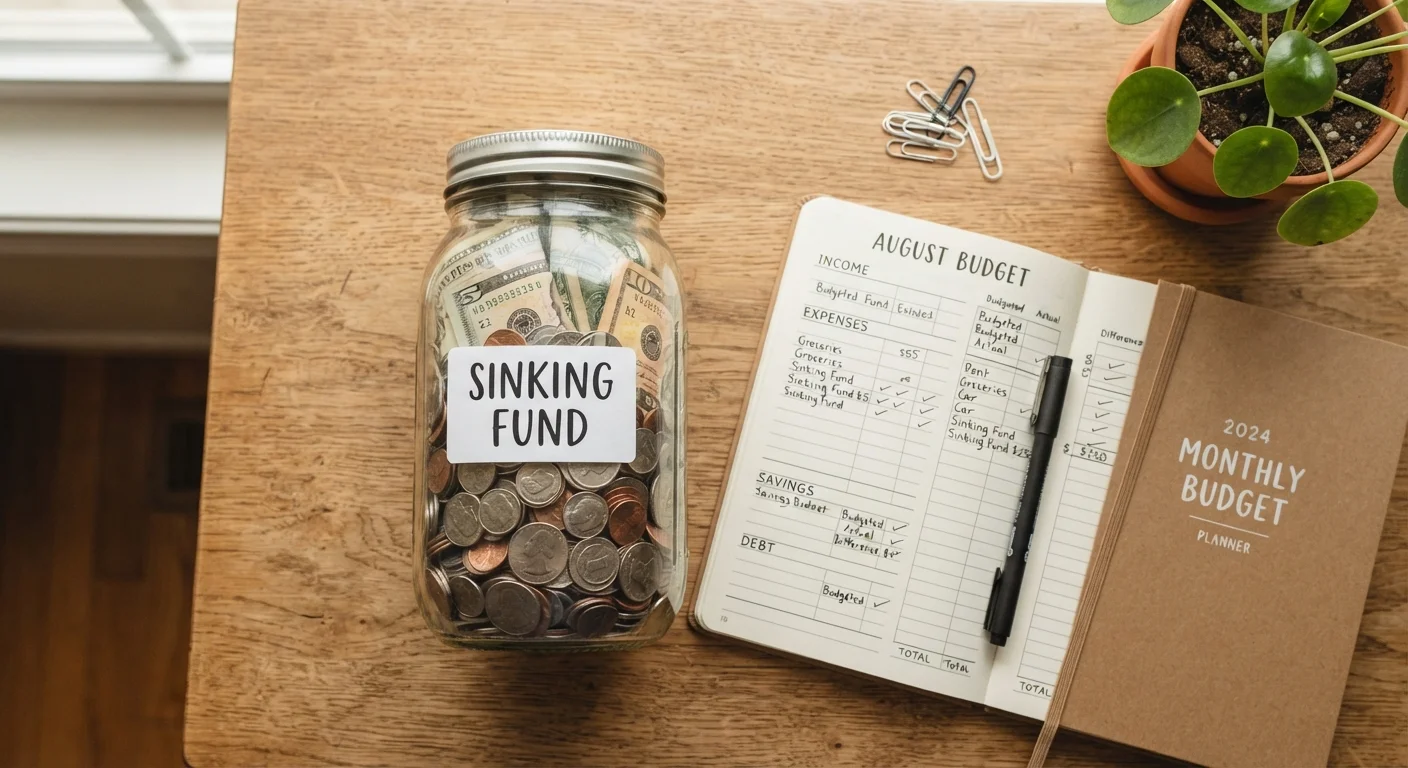
Photo: Online-Searches.net | Explore Insightful Blogs editorial
Key Takeaways
- A sinking fund is saved money earmarked for a specific, foreseeable expense — not emergencies.
- It differs from an emergency fund, which covers unexpected events with no clear timeline.
- Dividing the target amount by the months until the expense tells you the monthly savings needed.
- Sinking funds can coexist with debt payoff — even small contributions reduce financial disruption.
- You can maintain multiple sinking funds simultaneously, each for a different goal.
- High-yield savings accounts are a practical place to keep sinking funds separate and accessible.
What a Sinking Fund Actually Is
Think of a sinking fund as a savings category with a job. Instead of pooling all your savings together and hoping there's enough when a big bill arrives, you set aside a fixed amount each month toward one specific goal — then spend that money guilt-free when the time comes.
The concept is simple, but it solves a real problem. Irregular expenses are among the most common reasons people carry credit card balances. The expense itself wasn't a surprise — car registration, a holiday trip, the dentist — but the money wasn't ready when the bill arrived. A sinking fund closes that gap by converting a lump-sum future cost into small, predictable monthly contributions.
To size a sinking fund, divide the total expected cost by the number of months until you need it. If a family vacation will cost $1,200 and you have 10 months to save, you need $120 per month. If annual car insurance renews in six months and costs $900, you need $150 per month. The math is intentionally straightforward.
Sinking Funds Are Not the Same as General Savings
Sinking Funds vs. Emergency Funds: An Important Distinction
People often confuse sinking funds with emergency funds, but the two serve fundamentally different roles. Understanding the distinction helps you use both more effectively.
An emergency fund exists for unexpected events — a layoff, an ER visit, a sudden appliance failure. It has no defined spending timeline because you don't know when you'll need it. The size of an emergency fund is typically framed as three to six months of living expenses, though your actual life circumstances may call for more.
A sinking fund, by contrast, covers predictable expenses with a known deadline. Using emergency fund money for a holiday trip or an annual insurance bill isn't just bad accounting — it leaves you exposed if a real emergency follows soon after. Keeping these funds separate maintains the integrity of both.
If you're still building your initial emergency fund, that doesn't mean sinking funds have to wait entirely. Even a small, dedicated sinking fund for your highest-risk irregular expense can prevent you from raiding emergency savings or reaching for a credit card when that expense lands.
Using Sinking Funds While Paying Down Debt
One of the most common personal finance dilemmas is whether to focus entirely on debt or split attention between debt payoff and saving. Sinking funds offer a pragmatic middle path.
The risk of putting every spare dollar toward debt and saving nothing is that any irregular expense — even an expected one — can force you back into debt. You pay down a credit card, then charge a car repair you knew was coming, and find yourself back where you started. Sinking funds interrupt that cycle.
Rather than choosing between debt payoff and financial preparedness, consider funding at least one or two sinking funds for your most certain upcoming expenses while directing the majority of surplus income toward debt. This approach is explored in more depth in this framework for paying off debt while saving.
Start With Your Most Predictable Expense
As your debt decreases and monthly cash flow improves, you can expand your sinking fund categories. This mirrors the structure of a well-built monthly budget — see how to build a budget around both debt and savings goals for a practical framework.
Setting Up and Managing Sinking Funds
The operational side of sinking funds is flexible. Some people use a single savings account and track each fund in a spreadsheet. Others open separate savings accounts for each category — many online banks allow multiple savings accounts with custom labels at no cost. Either approach works; what matters is visibility and consistency.
High-yield savings accounts are often a practical home for sinking funds. They keep the money accessible when you need it, earn more than a standard savings account, and stay clearly separated from your checking account so casual spending doesn't erode your progress. Avoid placing sinking fund money in investments tied to market performance — you need a predictable amount available by a specific date. Understanding where your savings should sit can help you choose the right account type.
Automate contributions where possible. Treating a sinking fund like any other fixed monthly bill — money moves on payday, before discretionary spending — removes the temptation to skip months. Review each fund quarterly to adjust for cost changes or revised timelines.
40%
Americans who can't cover a $400 emergency expense in cash
According to the Federal Reserve's Report on the Economic Well-Being of U.S. Households, a significant share of adults struggle to absorb even modest unplanned costs without borrowing.
$1,500+
Average annual cost of unexpected car repairs
Industry estimates from consumer automotive research consistently place routine and unexpected vehicle maintenance among the most common sources of financial disruption for American households.
This article is for general informational purposes only and does not constitute personalized financial advice. Consult a qualified financial professional for guidance specific to your situation.
Frequently Asked Questions
The content provided on our blog site traverses numerous categories, offering readers valuable and practical information. Readers can use the editorial team’s research and data to gain more insights into their topics of interest. However, they are requested not to treat the articles as conclusive. The website team cannot be held responsible for differences in data or inaccuracies found across other platforms. Please also note that the site might also miss out on various schemes and offers available that the readers may find more beneficial than the ones we cover.