
Iceland's Seasons Explained: Why Timing Shapes Everything About Your Visit

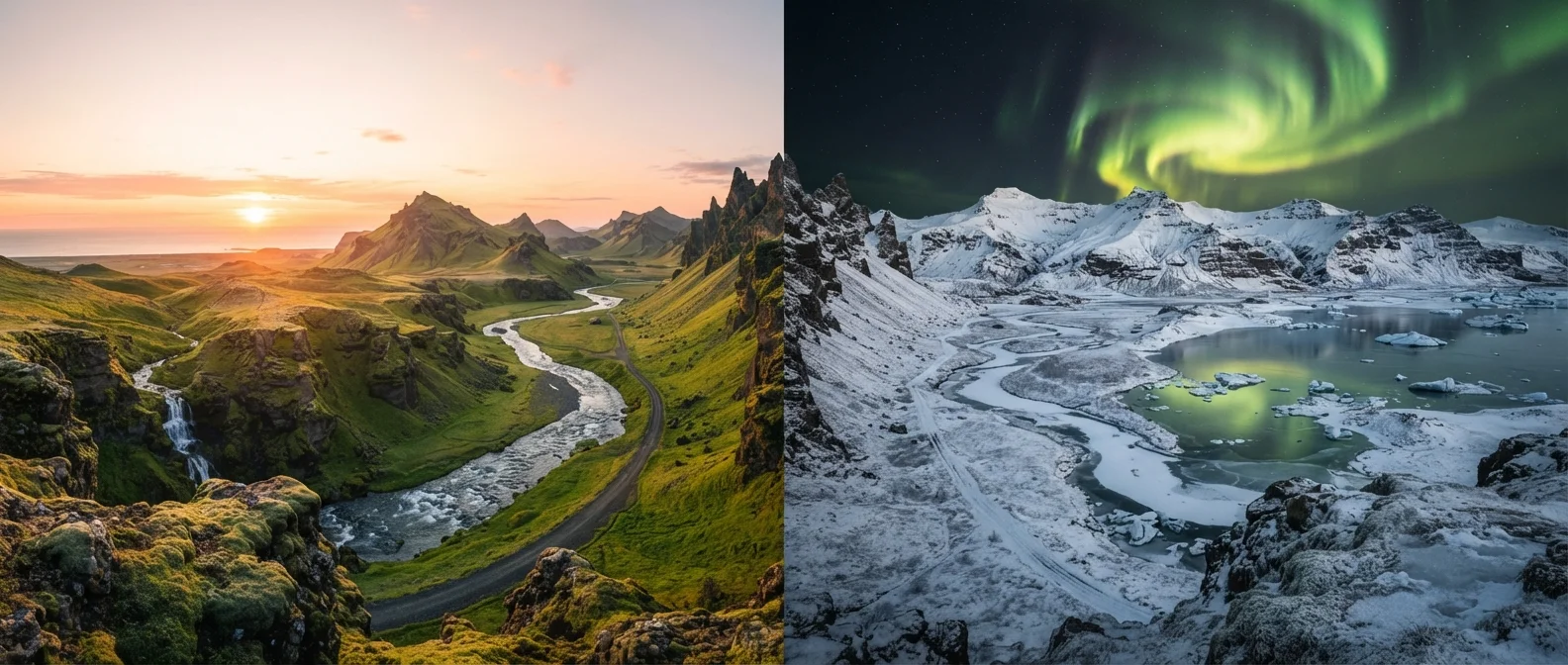
Photo: Online-Searches.net | Explore Insightful Blogs editorial
Key Takeaways
- Summer offers the midnight sun and full access to Highland roads, but also peak crowds and higher prices.
- Winter delivers aurora borealis opportunities and dramatic scenery, but many interior routes are inaccessible.
- Shoulder seasons (May and September) often balance manageable weather with fewer visitors.
- Road closures due to weather and snow can significantly limit itinerary options outside summer.
- Daylight hours in Iceland shift more dramatically than most travelers expect — plan activities accordingly.
- No single season is objectively best; your priorities determine the right time to visit.
Summer (June–August): Land of the Midnight Sun
Iceland in summer is a revelation — the kind of place that makes you question why you ever visited anywhere else in July. The midnight sun means daylight stretches around the clock near the solstice, giving you an almost surreal amount of time to explore. Waterfalls like Skógafoss and Seljalandsfoss glow golden at midnight, and the Highlands open their rugged interior roads (called F-roads) for the first time since autumn.
This is also when Iceland is most accessible: nearly all roads are open, puffins nest along the Westfjords cliffs, wildflowers dot the lava fields, and temperatures hover in the 10–15°C (50–59°F) range. That said, summer is unambiguously peak season. Reykjavik fills up, Geysir and Gullfoss get busy by mid-morning, and accommodation prices reflect the demand. Travelers who value spontaneity should note that last-minute bookings in July are genuinely difficult.
Pack for All Four Seasons in One Day
If you're drawn to summer's long days but want thinner crowds, May and early June offer improving conditions with noticeably fewer visitors — a pattern explored in more depth in our look at peak vs. off-season tradeoffs.
Winter (November–February): Aurora Season and Arctic Drama
Winter in Iceland is not for the timid, but it rewards those who come prepared. Darkness dominates — near the December solstice, Reykjavik sees only four to five hours of true daylight — yet that darkness is precisely the point. Long nights create the ideal canvas for the northern lights, and on clear evenings away from city glow, the aurora borealis can be spectacular.
Ice caves inside Vatnajökull glacier are only accessible and safe during winter months, when lower temperatures stabilize them. Snow-covered lava fields, frozen waterfalls, and quieter tourist sites create an atmosphere that feels genuinely different from summer Iceland. However, travelers must plan around significant constraints: F-roads are firmly closed, coastal routes can be icy, and weather can ground or reroute plans entirely. Flexibility is less a nice-to-have and more a survival skill.
Verify Road and Entry Conditions Before You Go
Aurora sightings depend on solar activity, cloud cover, and light pollution — none of which are guaranteed. Forecasting apps can help identify active windows, but it's wise to plan at least three to four nights in a dark location to improve your odds rather than counting on a single clear evening.
Shoulder Seasons (May and September): Iceland's Sweet Spot
Ask seasoned Iceland travelers when they'd go back, and many say September without hesitation. Early autumn brings the first hints of aurora visibility while summer's greenery still lingers. Tourist traffic drops meaningfully after August, which means shorter lines at popular stops and a more relaxed pace overall. Temperatures are cool but manageable, typically 5–10°C (41–50°F), and daylight sits at a practical 12–14 hours.
May offers a similar balance on the other side of the calendar. Snow is retreating from lower elevations, highland roads are on the cusp of opening, and the midnight sun is building toward its June peak. Birdlife is active, lambs dot the hillsides, and the landscape feels almost impossibly fresh. Neither shoulder month is perfect — weather remains unpredictable, and some highland routes stay closed — but they consistently rank among the most rewarding windows for travelers willing to layer up and stay flexible.
This kind of seasonal nuance applies at many destinations, much like what visitors discover when exploring coastal Maine in the off-season. The quieter version of a place often reveals something the peak-season version never could.
24 hrs
Daylight near summer solstice in Iceland
Around June 21st, Iceland experiences continuous daylight — the sun dips below the horizon for only a few minutes, if at all, near Reykjavik.
4–5 hrs
Daylight hours near winter solstice
At Iceland's darkest point in late December, usable daylight in Reykjavik is limited to roughly four to five hours, making compact daily itineraries essential.
~Oct–May
Highland F-road closure period
Iceland's interior highland roads are officially closed for vehicles each year due to snow and impassable terrain, typically from around October through late May or early June.
What Doesn't Change — and Why That Matters
Iceland's core geographic drama — volcanoes, geysers, glaciers, black sand beaches — is present year-round. Þingvellir National Park, the Golden Circle, and the South Coast are all accessible in every season, though daylight and conditions shape the experience differently. Understanding what stays constant helps you anchor your expectations while seasonal factors handle the rest.
The practical lesson: match the season to your non-negotiable priorities. Chasing the midnight sun? Summer is your window. Desperate for a northern lights sighting? Plan for winter or early autumn. Want fewer crowds and still-impressive scenery? Shoulder months deliver. Iceland rarely disappoints — but it will deliver a completely different experience depending on when you arrive.
Frequently Asked Questions
The content provided on our blog site traverses numerous categories, offering readers valuable and practical information. Readers can use the editorial team’s research and data to gain more insights into their topics of interest. However, they are requested not to treat the articles as conclusive. The website team cannot be held responsible for differences in data or inaccuracies found across other platforms. Please also note that the site might also miss out on various schemes and offers available that the readers may find more beneficial than the ones we cover.