
Packing for a Trip Without Starting Over Three Times

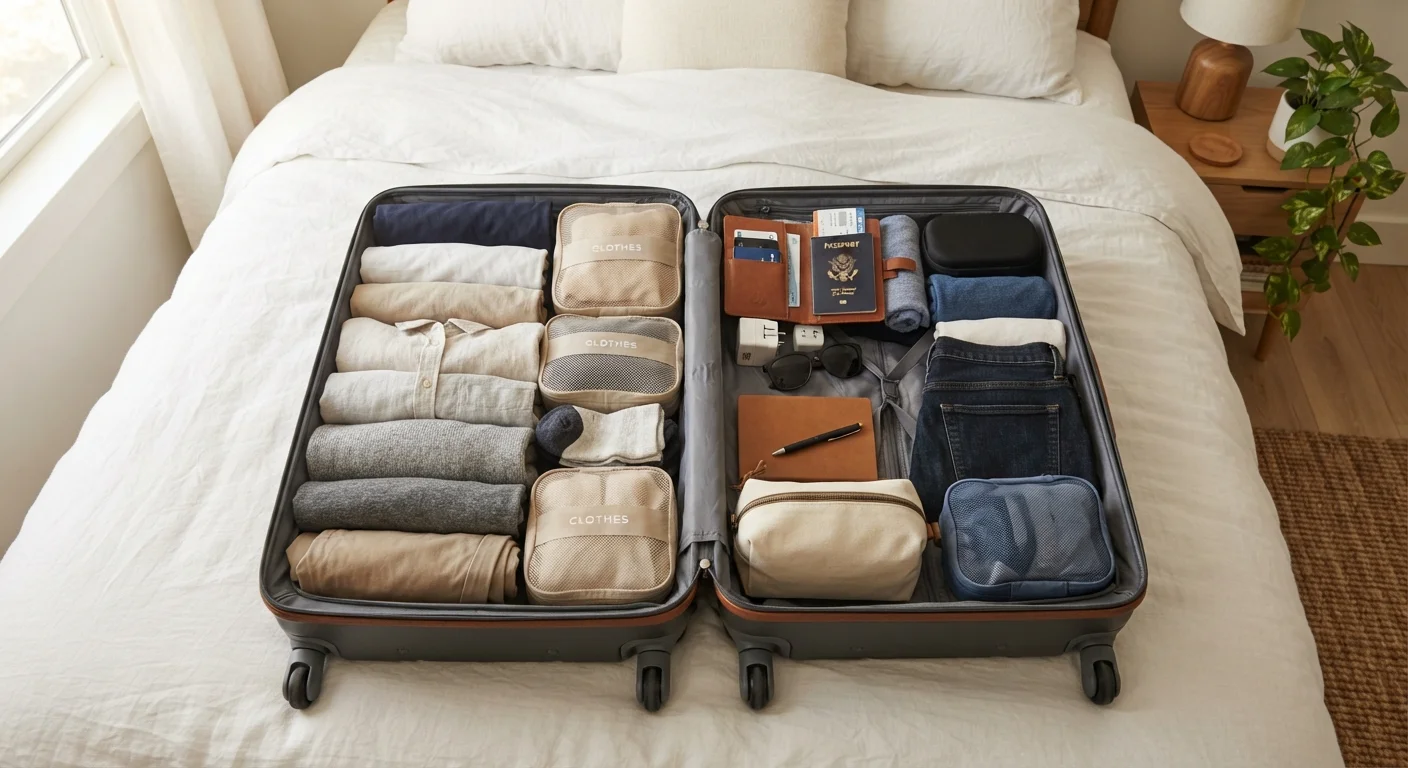
Photo: Online-Searches.net | Explore Insightful Blogs editorial
Key Takeaways
- Packing around your itinerary's activities — not your anxiety — prevents most overpacking.
- A master list built once saves you from starting over every single trip.
- Choosing your bag size before you pack, not after, keeps the process honest.
- The 'one re-wear' rule cuts clothing volume roughly in half without sacrificing comfort.
- Doing a trial pack 48 hours before departure reveals problems you can still fix.
Why Packing Goes Wrong Before You Even Open the Bag
The most common packing mistakes happen in the planning stage — or the absence of one. Most people approach packing emotionally: they imagine worst-case scenarios, pack for the trip they're anxious about rather than the trip they've actually planned, and end up hauling weight that never leaves the hotel room. The result is a bag that's hard to manage, costs extra at the airport, and makes every transit leg more exhausting than it needs to be.
The other failure mode is under-packing through overconfidence — skipping essentials because the bag felt heavy, then spending money replacing forgotten items at the destination. Both problems share the same root cause: no clear system. Overpacking is harder to fix than it seems — mostly because it feels like preparedness right up until you're dragging that bag through a cobblestone street. The fix isn't willpower; it's process.
Keep One Master Packing List
What You Need Before You Start
A smooth packing session depends on having the right inputs ready. Without a confirmed sense of your activities, duration, and bag constraints, you're making decisions without enough information — which is exactly how the starting-over cycle begins.
What you will need
Packing cubes
Compress and separate clothing categories so your bag stays organized and easy to unpack at each destination.
Digital luggage scale
Verify your bag's weight before the airport so you avoid surprise overweight fees at check-in.
Reusable quart-sized zip bags
Keep liquids TSA-compliant and prevent leaks from reaching your clothing.
A printed or digital packing checklist
Serves as your objective reference so emotion and last-minute panic don't drive packing decisions.
Follow These Steps to Pack with Confidence
The steps below walk you through a complete, repeatable packing process — from trip analysis to the final weight check. Follow them in order the first time; after two or three trips, the sequence becomes instinct.
Anchor your packing to the itinerary, not your imagination
Before touching a single item of clothing, write down every distinct activity type on your trip — hiking, business meetings, beach days, dinners out, long travel days. This is the only honest foundation for packing decisions. If your itinerary is well-structured, this step takes under ten minutes and immediately eliminates whole categories of "just in case" items.
Choose your bag size before you start loading it
Most people grab a bag, fill it, realize it's overflowing, and start over with a larger one. Reverse that sequence. Decide on your bag — carry-on or checked — based on trip length and laundry access, then pack to fit it. This single constraint does more to prevent overpacking than any packing tip. For trips up to seven days with laundry access, a carry-on is genuinely achievable for most travelers. For a deeper look at making that work, see what carry-on-only travel actually requires.
Build your clothing list using the one re-wear rule
For every trip longer than two nights, plan to re-wear at least one clothing item per category (bottoms, tops, outerwear). On a five-night trip, that typically means three bottoms, four or five tops, and one versatile layer — not one outfit per day. Neutral colors that mix and match easily stretch your wardrobe options without adding volume. This rule alone tends to cut clothing weight by 30–40% compared to default packing habits.
Handle toiletries, tech, and documents as separate categories
Don't fold these into your clothing decisions — tackle them distinctly. Toiletries: decant into travel-sized containers, use a quart bag for liquids, and skip anything available at your accommodation or easily purchased at your destination. Tech: list every device and its charger as a pair — if you bring the device, the charger is non-negotiable. Documents: passport, ID, insurance cards, printed confirmations, and any medication documentation should be gathered last and checked against your pre-departure checklist so nothing critical gets forgotten.
Do a timed trial pack 48 hours before departure
Pack everything you intend to bring, zip the bag, and weigh it. Then walk around with it for five minutes. If it feels unmanageable, something comes out — not a bigger bag goes in. Having 48 hours means you can identify a forgotten item, swap out a bulky piece, or pick up a travel-sized essential without scrambling. This buffer is the difference between a confident departure and a chaotic one. See how this fits into the broader habits that experienced travelers rely on.
Don't Pack Medications Without Checking Rules First
After the Trip: Turning One Good Pack Into a System
The travelers who consistently pack well aren't more disciplined — they're working from better information. Each trip generates data: what you used daily, what you never touched, what you wished you'd brought. Capturing that takes five minutes at baggage claim or on the ride home, and it compounds quickly into a personalized system that generic packing lists can't replicate.
If you want to take the next step toward traveling even lighter, explore carry-on-only strategies for any trip length. And for everything else that can quietly derail an otherwise well-planned journey, the small habits that frequent travelers swear by are worth building before your next departure.
The content provided on our blog site traverses numerous categories, offering readers valuable and practical information. Readers can use the editorial team’s research and data to gain more insights into their topics of interest. However, they are requested not to treat the articles as conclusive. The website team cannot be held responsible for differences in data or inaccuracies found across other platforms. Please also note that the site might also miss out on various schemes and offers available that the readers may find more beneficial than the ones we cover.