
Oil Change Intervals: What the Sticker in Your Windshield Isn't Telling You

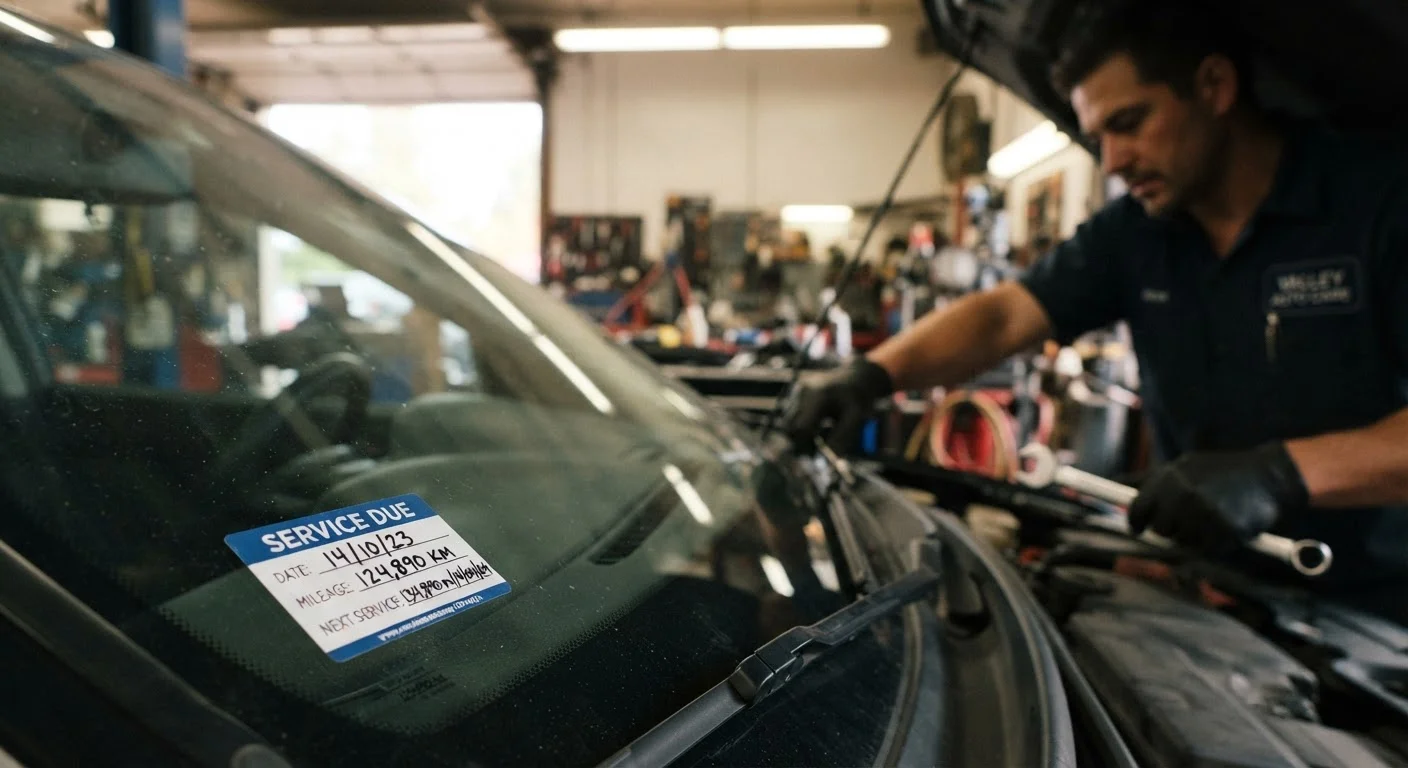
Photo: Online-Searches.net | Explore Insightful Blogs editorial
Key Takeaways
- The 3,000-mile oil change rule is outdated for the vast majority of modern vehicles.
- Your owner's manual — not a windshield sticker — is the authoritative source for your car's oil change interval.
- Full synthetic oil and engine monitoring systems have extended recommended intervals to 5,000–10,000 miles or more on many vehicles.
- Driving conditions matter: short trips, extreme temperatures, and towing can shorten the interval your engine actually needs.
- Changing oil too frequently wastes money; changing it too infrequently risks real engine damage.
Why the Windshield Sticker Gets It Wrong
The small sticker slapped on your windshield at a quick-lube shop is a marketing tool as much as a maintenance reminder. Many service centers still default to the 3,000-mile interval regardless of your vehicle, oil type, or driving habits — because shorter intervals mean more return visits. That number was a reasonable rule of thumb for cars built decades ago running conventional motor oil, but it no longer reflects how modern engines and lubricants actually perform.
Today's vehicles are engineered to much tighter tolerances, and full synthetic oils are formulated to maintain protective viscosity and resist breakdown for significantly longer than their conventional predecessors. Following an artificially short interval doesn't hurt your engine — it just empties your wallet faster than necessary. See maintenance myths that cost drivers unnecessary money for other costly misconceptions like this one.
Myth
You should change your oil every 3,000 miles, no matter what.
Fact
Most modern vehicles using full synthetic oil require changes every 5,000 to 10,000 miles or more, per manufacturer specifications.
The 3,000-mile standard originated when conventional motor oils and older engine designs made it appropriate. Full synthetic lubricants, now factory-recommended in the majority of new vehicles, are chemically engineered to resist thermal breakdown and oxidation far longer. Following the old rule on a modern engine running synthetic oil doesn't improve protection — it simply generates unnecessary waste and expense.
Myth
If the oil still looks clean on the dipstick, you don't need to change it yet.
Fact
Oil color is not a reliable indicator of its remaining service life or protective quality.
Motor oil darkens quickly after an oil change because it's doing its job — suspending combustion byproducts and microscopic metal particles in the fluid rather than letting them deposit on engine surfaces. Dark oil isn't necessarily degraded oil. Conversely, oil can appear relatively clear while its additive package — the detergents, anti-wear agents, and viscosity modifiers — is substantially depleted. Only mileage, time, and monitoring data tell the real story.
Myth
Switching to synthetic oil in a high-mileage engine will cause leaks.
Fact
Modern full synthetic oils are compatible with high-mileage engines and do not cause seals to shrink or leak.
This myth has roots in early synthetic formulations that contained certain esters which could interact with older seal materials. Contemporary synthetic oils — including high-mileage-specific blends — are formulated to condition seals, not degrade them. If a high-mileage engine has existing seal wear or pre-existing seepage, switching oil types may allow a previously masked slow leak to become visible, but the synthetic itself isn't the cause. A qualified mechanic can assess seal condition if you have concerns.
Myth
All engines need the same type and weight of oil.
Fact
Oil viscosity grade and specification are engine-specific; using the wrong grade can reduce protection and fuel economy.
Viscosity grades — such as 0W-20, 5W-30, or 5W-40 — describe how the oil flows at cold start and at operating temperature. Manufacturers specify the grade that matches their engine's clearances and oil pump design. Using a heavier grade than specified doesn't add protection; it can increase friction, reduce fuel efficiency, and strain the oil pump. Using a lighter grade in an engine requiring a heavier one can allow metal-to-metal contact under load. Always use the viscosity grade listed in your owner's manual or on the oil filler cap.
Myth
You only need to change oil based on mileage — time doesn't matter.
Fact
Oil degrades over time even in a vehicle that isn't driven much; most manufacturers recommend changing it at least once a year regardless of mileage.
For drivers who cover low annual mileage — under 5,000 miles per year — the calendar matters as much as the odometer. Moisture accumulates in the oil through short cold-start cycles, and oxidation occurs during storage. Most manufacturers specify an interval expressed as whichever comes first: a mileage milestone or a time period, often 12 months. A vehicle driven infrequently but whose oil hasn't been changed in over a year should typically receive a fresh change regardless of mileage.
How to Find the Interval That Actually Applies to Your Car
Your owner's manual is the single most reliable source for your vehicle's recommended oil change interval. Manufacturers publish these intervals based on extensive engine testing — they are specific to your engine design, oil capacity, and the grade of oil required. Many drivers have never opened that manual, which is exactly what service shops count on.
Many vehicles built within the past decade also include an oil life monitoring system (OLMS) — an onboard algorithm that tracks engine load, temperature cycles, cold starts, and mileage to calculate when an oil change is genuinely due. When that system alerts you, that's your cue — not a calendar reminder or a shop sticker. For a broader look at what your vehicle's scheduled milestones mean, see your car's maintenance schedule explained.
5,000–10,000
Typical synthetic oil change interval (miles)
Most major automakers specify full synthetic oil change intervals in this range for vehicles built in the past decade, under normal driving conditions.
~70%
New U.S. vehicles factory-filled with synthetic oil
Industry estimates suggest the large majority of new passenger vehicles sold in the U.S. now come from the factory with full synthetic or synthetic-blend motor oil.
If your vehicle doesn't have an OLMS, cross-reference the owner's manual with your actual driving pattern. The manual typically lists two schedules: one for normal driving and one for severe conditions — the latter applying to short trips under five miles, stop-and-go city driving, extreme heat or cold, trailer towing, or dusty environments. Many everyday drivers who think they drive normally actually fall into the severe category.
The Real Risks of Getting the Interval Wrong in Either Direction
Changing your oil too early is wasteful but harmless. Waiting too long is where real damage occurs. Motor oil degrades through a combination of heat cycling, oxidation, and contamination from combustion byproducts. As it breaks down, it loses viscosity — its ability to maintain a protective film between metal components. Running an engine on degraded oil accelerates wear on bearings, camshafts, and cylinder walls, and can lead to sludge buildup that clogs oil passages.
Sludge Damage Is Often Irreversible
On the other end, drivers who change oil obsessively early don't gain any extra protection. Fresh oil doesn't provide meaningfully better lubrication than oil that's still well within its service life. The environmental and financial cost of discarding usable oil is real with no corresponding benefit. Developing a consistent, correctly timed maintenance habit is one of the practices that separate high-mileage cars from early junkers.
New vehicle owners are particularly vulnerable to misinformation in the first months of ownership. Establishing the right interval early — rather than defaulting to the shop sticker — is one of the things new car owners frequently overlook in the first six months.
The content provided on our blog site traverses numerous categories, offering readers valuable and practical information. Readers can use the editorial team’s research and data to gain more insights into their topics of interest. However, they are requested not to treat the articles as conclusive. The website team cannot be held responsible for differences in data or inaccuracies found across other platforms. Please also note that the site might also miss out on various schemes and offers available that the readers may find more beneficial than the ones we cover.