
Why Grass Goes Thin, Yellow, or Patchy — and What's Behind Each Problem

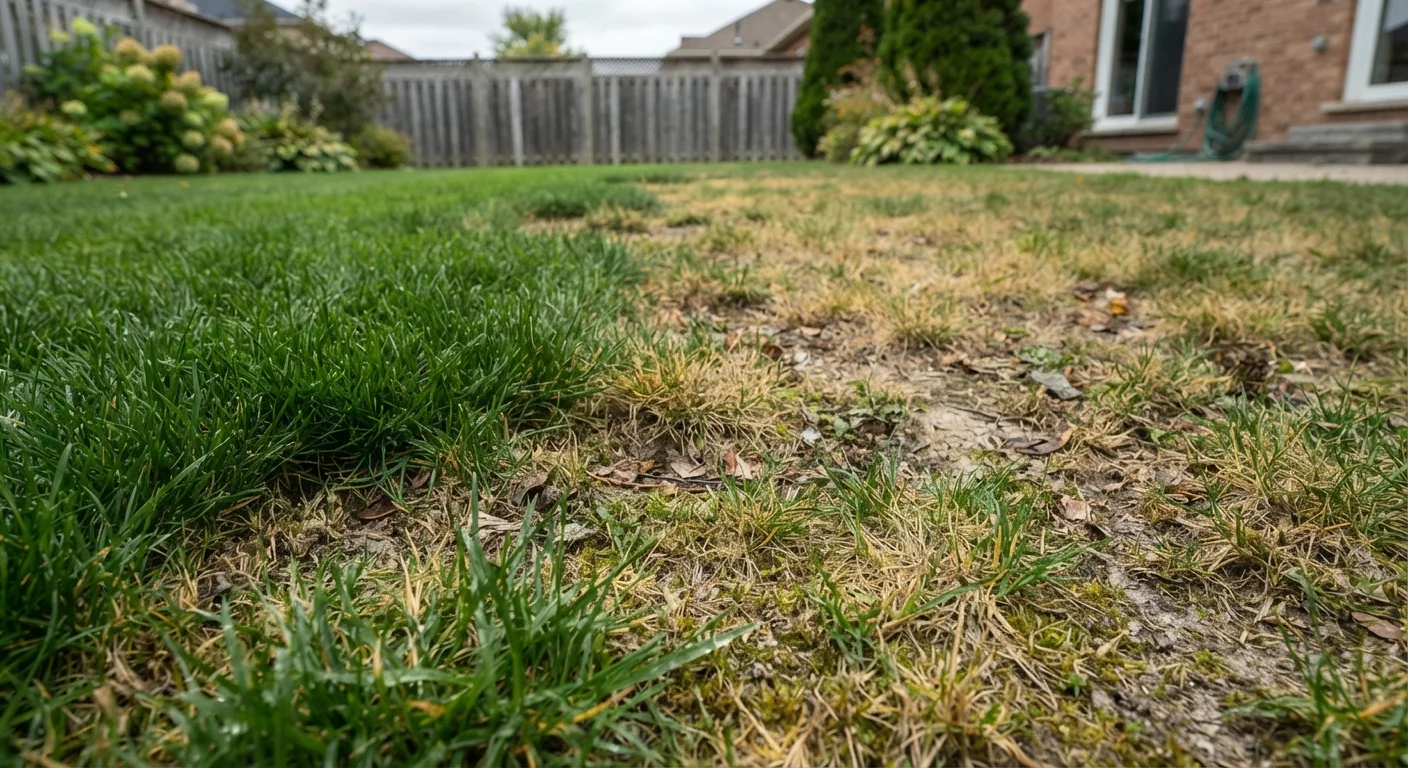
Photo: Online-Searches.net | Explore Insightful Blogs editorial
Key Takeaways
- Yellow grass, thin turf, and bare patches each have distinct causes that require different fixes.
- Misdiagnosing the problem often leads to wasted effort — treating for drought when disease is the real culprit, for example.
- Soil health, mowing habits, and grass type compatibility are among the most overlooked root causes.
- Most lawn problems are correctable once the cause is accurately identified.
Reading Your Lawn's Warning Signs
A struggling lawn rarely fails for one simple reason. Yellowing can mean drought stress, nitrogen deficiency, disease, or compacted roots — and each demands a completely different response. Jumping straight to a fix without diagnosing the actual problem is one of the most common and costly mistakes homeowners make.
Think of lawn problems as symptoms rather than conditions. The color, pattern, and texture of the damage are clues. A uniform pale yellow across the whole lawn suggests a nutrition or watering issue. Irregular brown or straw-colored rings often point to fungal disease. Distinct bare patches that won't fill in — despite reseeding — usually signal something wrong beneath the surface.
Before reaching for a bag of fertilizer or a hose, take ten minutes to look closely. Is the damage spreading or static? Does it follow shade lines, low spots, or areas of heavy foot traffic? Understanding what your lawn soil is actually telling you is often the missing first step.
~40%
Of lawn problems linked to soil compaction
Lawn care professionals and extension educators commonly cite soil compaction as a contributing factor in a large share of persistent thin or bare turf cases, particularly in high-traffic residential yards.
1/3 Rule
Maximum grass height removed per mow
Turfgrass science consistently supports the one-third rule as a baseline for maintaining root health and density across most common grass species.
Common Mistakes That Lead to Thin, Yellow, or Patchy Grass
Most lawn problems trace back to a handful of repeated errors. Recognizing these patterns helps you stop the cycle rather than just treat the symptoms year after year.
Assuming yellow grass always means it needs more water.
Mowing too short, stressing grass roots and inviting weeds.
Fertilizing on a guesswork schedule rather than based on soil test results.
Ignoring soil compaction as a source of persistent bare or thin patches.
Treating fungal disease with more fertilizer or water.
Don't Reseed Over an Unresolved Problem
Grass type mismatch is another frequently overlooked issue. If your lawn was seeded with a variety poorly suited to your regional climate, no amount of care will produce a consistently dense, green result. Understanding the difference between cool-season and warm-season species is foundational — see cool-season vs. warm-season grasses explained for a clear breakdown by region.
If you've identified bare areas as the end result of chronic problems, seeding a lawn from scratch properly — including soil prep and timing — gives those repairs the best chance of lasting.
The content provided on our blog site traverses numerous categories, offering readers valuable and practical information. Readers can use the editorial team’s research and data to gain more insights into their topics of interest. However, they are requested not to treat the articles as conclusive. The website team cannot be held responsible for differences in data or inaccuracies found across other platforms. Please also note that the site might also miss out on various schemes and offers available that the readers may find more beneficial than the ones we cover.